This Swiss food and drink guide starts with one simple rule: order regionally. Choose Chasselas beside Lake Geneva, Merlot and polenta in Ticino, rösti in Zürich, and mountain dishes in the Engadine. The point is not to complete a checklist. It is to let each meal tell you where you are.
- Order the dish and wine connected to the region around you.
- Choose fewer restaurants and leave enough time to enjoy them.
- Ask what is seasonal before deciding from a list.
Lake Geneva and Lavaux
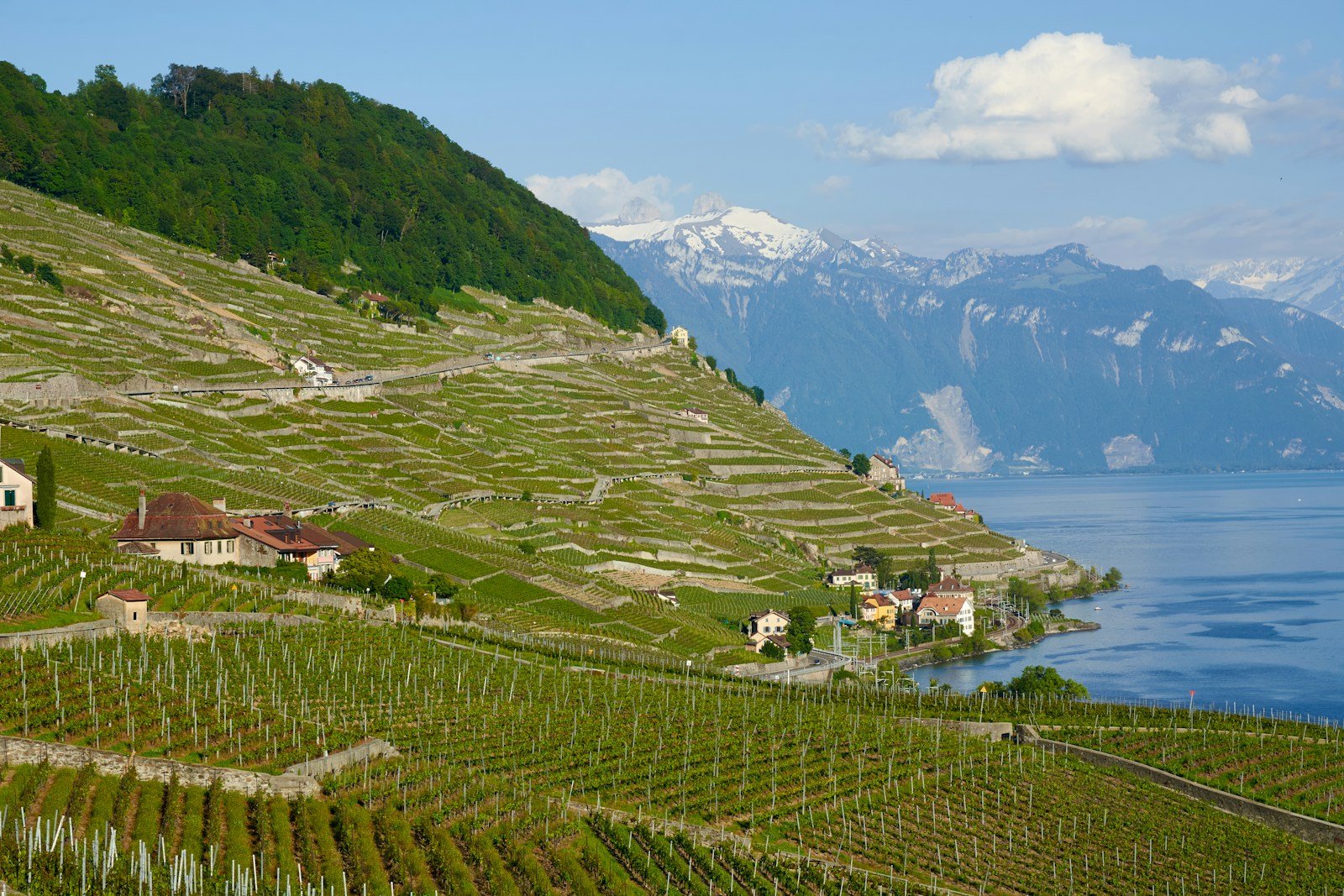
Above Lake Geneva, Lavaux is defined by terraced vineyards and Chasselas. The wine is light, local and closely tied to the landscape. Pair it with lake fish or a simple plate at a winegrower's table when available.
Lutry, Cully and the villages along the terraces make the experience as important as the bottle. Build in time to walk, taste and look across the lake rather than treating the vineyards as a quick stop between cities.
Ticino
In Ticino, look for grottos, local Merlot, polenta and slow-cooked dishes. The atmosphere matters: stone, shade, shared tables and food that suits the warmer southern climate. Choose the place for its character as much as its menu.
Organic producers add another view of the region. At Azienda Agricola Bianchi, wine, honey, herbal products, vineyard visits and beekeeping connect the meal back to the land.
Zürich and German-speaking Switzerland
Zürcher Geschnetzeltes with rösti is the city's classic order. Beyond it, Zürich gives you everything from traditional rooms to modern tasting menus and casual lakeside meals. Decide whether you want local history, ambitious cooking or a relaxed setting before choosing the restaurant.
Swiss Pinot Noir and local beer are worth asking about. A good server can guide you towards producers that fit the dish without turning dinner into a lecture.
The Engadine
Engadine food reflects altitude and winter: capuns, pizzoccheri, dried meats and substantial mountain cooking. A wood-panelled Stube gives those dishes their natural setting, especially after a day outside.
Do not overfill the evening. Mountain transfers, changing weather and the pace of a long meal all deserve space in the plan.
When the menu is long, ask what belongs to this place and this season. The answer is often more memorable than ordering the most expensive or familiar dish.
Order with context
Tell the person guiding you what you already enjoy. If you prefer lighter wines, say so before asking for a local bottle. If you want to try a regional dish but do not like heavy food, ask for the best way into it. Local does not need to mean forcing yourself through an order that does not suit you.
Leave room for one recommendation from the room. A server, winemaker or host can often point you towards the seasonal plate, smaller producer or simple pairing that explains the region better than the menu headline.
Build the route around meals that matter
Choose one or two dining moments that define each region, then let the remaining meals stay simple. Check opening days, travel time and seasonal availability before you commit to a route.
Keep transport realistic after tastings and long dinners. A remote vineyard or mountain restaurant can be worth the journey, but the return should already be solved before the first glass arrives. When the route is awkward, make the meal part of a wider day in that region instead of treating it as a separate round trip.
You can research and reserve everything yourself. The work is narrowing the choices, matching them to your taste and keeping each table aligned with the wider journey.
You do not need more options. You need the right one.
We understand what you need, recommend what fits, and coordinate the details around the rest of your trip.
Velares is useful when the decision is not just where to book, but what fits the whole plan. We help you choose well, coordinate directly, and keep the details connected.
Get in touch →Use The Velares Switzerland Guide as your hub. Then read how to approach in-demand tables or plan your time in Zürich.